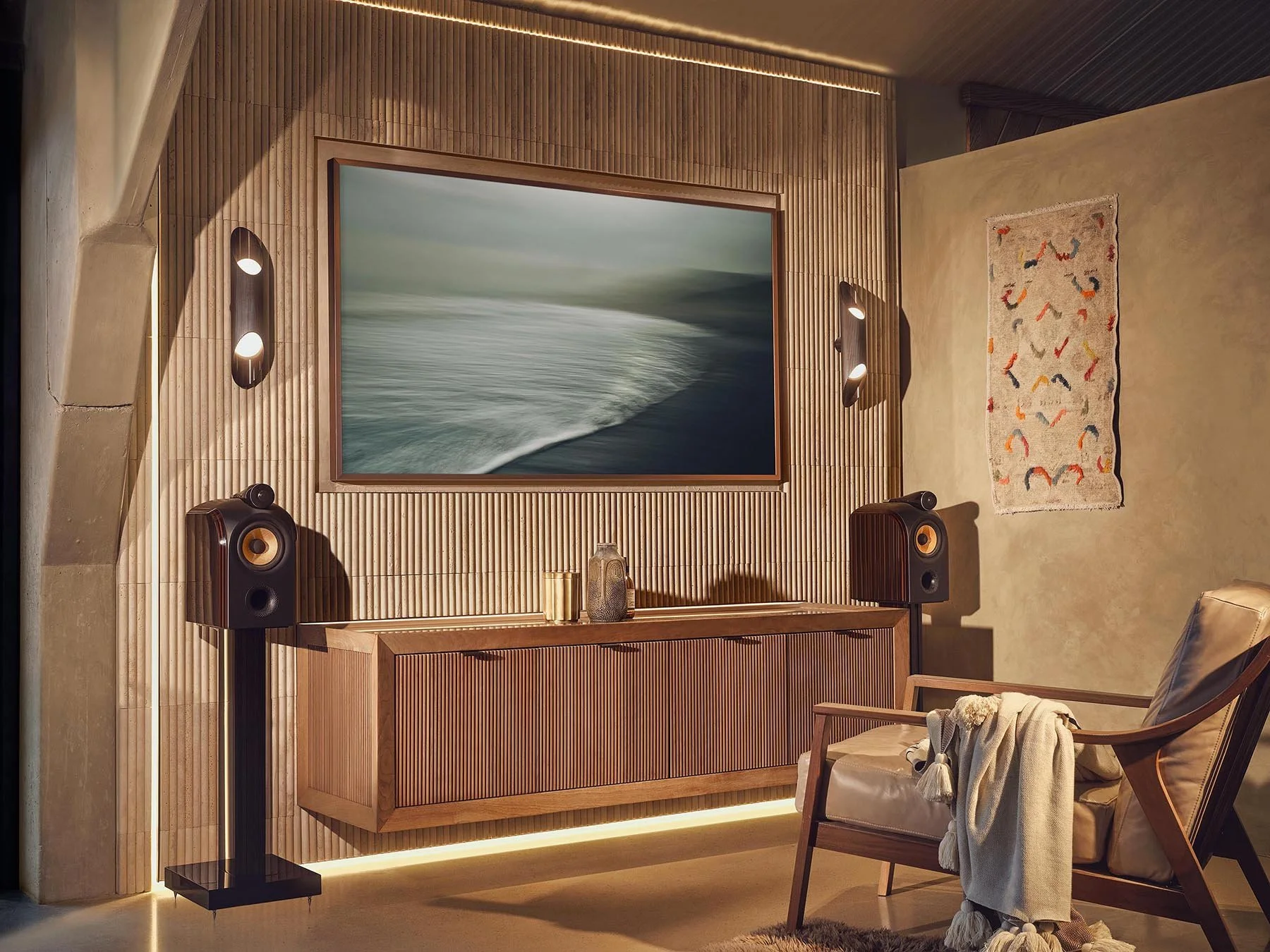
The Sound of a Room
Atmosphere is not just visual. The best spaces wrap you in sound as completely as they wrap you in light, and the two are inseparable when a room is working properly. I design both together from the first conversation.
That means thinking about how music moves through a home, not just how it plays in a single room. A listening environment that draws you in at the end of the day. A garden that holds its atmosphere after dark with sound as well as light. Spaces that feel enveloping rather than fitted out, where every sensory layer has been considered rather than left to chance.
There is not a moment of the last twenty-five years I have not been listening to music. Not sitting and listening in the audiophile sense, comparing cables and debating formats, but having it constantly present, surrounding everything. That is actually the harder problem to solve well. Music in the background is still music, and it still deserves to sound great. The system that fills a whole evening without demanding your attention is doing something more difficult than the one built around a single listening seat.
The spaces I work on are lived in, socially versatile, and designed around how people actually spend their evenings rather than around product categories. A room with a projector and a serious sound system should still feel like somewhere you would want to sit with your breakfast. The technology earns its place by disappearing into the architecture when you want it to, and by being worth looking at when you don't.
Speakers are specified as objects with presence or as invisible infrastructure depending on what the room asks for. The audio industry has remarkably little aesthetic ambition for an industry selling objects that sit in your living room. A ten percent improvement in measured performance means nothing if the thing looks wrong in the space. I specify what sounds good and looks considered, and I will always care more about the second than most would expect.
Systems are chosen for their integration as much as their performance. Control brings light and sound together so that shifting the mood of a space is a single effortless action rather than a sequence of adjustments.
I work with brands I trust and specify repeatedly. Bowers and Wilkins for speakers across every tier from in-ceiling to freestanding. Marantz and Denon for amplification and zone control. Lutron for integrated lighting and scene management. Not the only tools I use, but the ones I return to because they perform consistently and because the support infrastructure around them is serious.
That thinking extends outside. A garden with considered lighting and distributed audio becomes an extension of the interior after dark, holding atmosphere across the whole property rather than stopping at the back door.
Inside and outside. Day into evening. Every sensory layer considered.